Monday, February 24, 2025

Why Your Product Isn't Taking Off (CH7 From 'Start With Why')


All Book Summaries

Ever wonder why some amazing products flop while others, seemingly less impressive, become huge successes? It's not just about features or marketing budgets. It's about your "why." This post reveals the core ingredient that separates thriving businesses from those that fail and provides you with the tools to discover your "why" and cultivate a loyal following.

We've all seen it happen. A promising product, maybe even better than the competition, backed by serious money, vanishes. What gives?

This chapter dives into the crucial difference between what you do and why you do it. The key to igniting mass-market success lies in connecting with your audience on a deeper level – with their beliefs. It's about inspiring loyalty that goes beyond just a transaction.

Let's take a look at TiVo. They offered a game-changing product: pause live TV, skip commercials. Their marketing was slick, and the money was there. Yet, TiVo never became the household name it should have. Why? Because they hammered on the what – the features – instead of the why – empowering people to control their TV viewing experience and reclaim their time. TiVo's failure to articulate its "why" allowed cable companies to dominate the DVR market.

TiVo's Missed Opportunity: A Closer Look

TiVo's ads shouted features: "Pause Live TV!", "Skip Commercials Automatically!", "Record Your Favorite Shows!" Accurate, but they didn't connect with the frustration people felt with rigid TV schedules and endless ads. Imagine if TiVo had declared: "We believe you deserve control of your time and your TV experience." Their marketing could have focused on empowering viewers, not just selling features. Instead of highlighting what TiVo did, they could have inspired viewers with why it mattered.

Understanding Your Audience: The Key to Adoption

To get why the "why" is so important, let's talk about how new ideas spread. Think of it like a chain reaction. It starts with a spark, then builds momentum. This concept is formalized in the Law of Diffusion of Innovations, developed by Everett Rogers and expanded upon by Geoffrey Moore in Crossing the Chasm. It explains how new ideas spread. Trying to convince the average consumer (the early majority) to adopt something new right away is tough. They need proof. They need to see others have already bought in. That's why focusing on innovators and early adopters is key. These are the people who are naturally drawn to new ideas and willing to take risks. These groups also act as amplifiers, spreading the word and building initial momentum through word-of-mouth marketing.

How does a product gain traction? It starts with...

  • Innovators (2.5%): The risk-takers, always seeking the newest thing. Think blockchain or experimental AI. They're driven by discovery. Your "why" for them: Emphasize how groundbreaking your product is.
  • Early Adopters (13.5%): The visionaries who see the potential early on. Think early Tesla adopters or high-end smart homes. They're often influencers, driven by gaining a competitive edge. Your "why" for them: Emphasize how your product gives them a unique advantage.
  • Early Majority (34%): The pragmatists who need proof. Think smartphones or streaming services today. They're risk-averse and seek practical solutions. Your "why" for them: Focus on proven results and reliability.

While the Late Majority and Laggards are important, our focus will be on innovators, early adopters, and the early majority, as they are the key to initial market traction.

The Magic Number? 15-18% Penetration. Once you've grabbed this critical mass of innovators and early adopters, the early majority starts paying attention. They see the buzz, hear the reviews, and are more likely to jump on board.

Finding Your "WHY": A Mini-Workshop You Can Do Right Now

Ready to unearth your core purpose? Let's dive into a practical mini-workshop:

  1. Start with the Problem: What problem are you really solving? Dig deeper! What are the hidden frustrations, pain points, and unmet needs? Remember to tap into the emotional drivers behind the problem and understand your customer's perspective with empathy.

    • Exercise: Think about your ideal customer. What keeps them up at night? What are they complaining about to their friends? List 3 things, then ask "Why?" repeatedly, focusing on the feelings associated with the problem. Example: They're frustrated with slow internet. Why? Because it interrupts their work. Why? Because it makes them look unprofessional on video calls. Why? Because they feel like they're losing clients... (and feeling stressed, anxious, and inadequate).
    • Identify Your Beliefs: What drives you to solve this problem? What values are you upholding? What impact do you want to make?

    • Exercise: Complete these sentences: "I believe everyone deserves...", "I believe the world would be better if...", "I believe [industry/problem] needs to be..."

    • Articulate Your Purpose: Combine the problem and your beliefs into a simple statement. This is your "why."

    • Template: Our purpose is to [action verb] [target audience] so that they can [desired outcome] because we believe that [core belief]. (This is your 'mission statement' in its most authentic form.)

    • Test Your "Why": Does it feel right? Does it inspire you? Does it set you apart?

    • Checklist: Does it excite you? Does it clearly differentiate you? Would you be proud to shout it from the rooftops?

    • Simon Sinek's Golden Circle: This framework helps to articulate the "why", "how" and "what" of an organization and is highly relevant for finding your "why". It builds upon the previous workshop exercises. Simon Sinek's Golden Circle, a popular framework for understanding how successful organizations communicate, This framework helps to articulate the "why", "how" and "what" of an organization and is highly relevant for finding your "why". It builds upon the previous workshop exercises.
    • Why: The core belief and purpose (e.g., to inspire creativity).
    • How: The values and principles that support the "why" (e.g., transparency, innovation).
    • What: The tangible result of the "why" (e.g., the product or service itself). By starting with the "why", organizations can inspire customers...

Example:

  • Problem: People are drowning in personal finance complexity.
  • Beliefs: Everyone deserves financial security. Financial knowledge should be accessible.
  • Purpose: To empower individuals to take control of their financial lives and achieve their dreams because we believe that everyone deserves financial security.

Loyalty vs. Manipulation: Building a Lasting Connection

Lowering prices might get you a quick sale, but it doesn't buy loyalty. True loyalty comes from customers who believe what you believe. They're willing to pay more or put up with minor inconveniences because they're aligned with your purpose. Consider the difference between a customer drawn in by a fleeting discount and a loyal patron who identifies with your brand's values.

Compare this with fast fashion brands that are prioritizing low prices and rapid turnover, often at the expense of ethical labor practices and environmental sustainability. While they may attract customers with deals, they rarely inspire genuine loyalty. In contrast, a fair-trade coffee company often attracts loyal customers who are willing to pay a premium because they believe in supporting ethical sourcing and sustainable farming practices.

So, how do you attract these believers? Focus on your "WHY."

Tell your story. Explain why you created your product. What problem are you trying to solve? What impact do you want to make?

Authenticity is Key: Rethinking Influencer Marketing

People are smart. They can smell a fake endorsement a mile away. Instead of just paying for promotions, partner with influencers who genuinely believe in your "why" and are upfront about their relationship with you. Look for those who actually use and love your product. Check their content – do their values match yours? Focus on micro-influencers with engaged audiences. Treat them like partners, not just mouthpieces. For example, a sustainable clothing brand might partner with a minimalist lifestyle blogger who genuinely values ethical consumption and shares their commitment to reducing waste.

Examples of Brands That Get It:

  • Patagonia: Their "why" is environmental activism. Studies show that Patagonia enjoys significantly higher customer loyalty rates compared to their competitors due to their commitment to environmental activism. They communicate this through sustainable practices, donations, and encouraging repair and reuse, all visible on their website and in their marketing materials.
  • TOMS Shoes: Their "why" is improving lives through business. For every pair purchased, they donate a pair to a child in need. This is clearly communicated on their website and through their social media campaigns.
  • Warby Parker: Their "why" is providing affordable eyewear and vision care. They donate a pair of glasses for every pair sold. This is a core part of their brand story and is emphasized in their marketing.

The Power of Shared Belief: Lessons from Martin Luther King Jr.

Think about Martin Luther King Jr. He didn't just offer a plan for civil rights. He articulated a powerful belief in equality. People showed up not for him, but because they shared his belief. The "I Have a Dream" speech wasn't a detailed plan; it was a visceral reminder of shared values. He offered a place to go, not a plan to follow. He was trying to solve the problem of inequality, articulating a belief in a world where everyone is treated with dignity and respect. Just as MLK inspired a movement by articulating a shared belief, businesses can inspire loyalty and drive adoption by focusing on their "why" and connecting with customers on a deeper, more meaningful level.

But be mindful: "Why" can be used for manipulation. It's essential to ensure your "Why" is rooted in genuine values and ethical practices. Authenticity is paramount; without it, your "Why" will ring hollow.

In Conclusion: Lead With Your "WHY"

A clear "WHY" is paramount for cultivating a loyal customer base, reaching a tipping point, and driving meaningful change. Stop focusing on what your product does and start focusing on why it exists. Attract those who believe in your cause, and they will become your most passionate advocates, driving mass-market adoption and transforming your vision into reality.

Tags: Book Summary,Management,

When Motivated by WHY, Success Just Happens (Story of Wright Brothers)


All Book Summaries
It was a turn-of-the-century version of the dot-com boom. The promise of a revolutionary new technology was changing the way people imagined the future. And there was a race to see who could do it first. It was the end of the nineteenth century and the new technology was the airplane. One of the best-known men in the field was Samuel Pierpont Langley. Like many other inventors of his day, he was attempting to build the world's first heavier-than- air flying machine. The goal was to be the first to achieve machine- powered, controlled, manned flight. The good news was Langley had all the right ingredients for the enormous task; he had, what most would define as, the recipe for success.
Langley had achieved some renown within the academic com- munity as an astronomer, which earned him high-ranking and prestigious positions. He was secretary of the Smithsonian Institu- tion. He had been an assistant in the Harvard College Observatory and professor of mathematics at the United States Naval Academy.
Langley was very well connected. His friends included some of the most powerful men in government and business, including Andrew

Carnegie and Alexander Graham Bell. He was also extremely well funded. The War Department, the precursor the Department of Defense, had given him $50,000 for the project, a lot of money in those days. Money was no object.
Langley assembled some of the best and brightest minds of the day. His dream team included test pilot Charles Manly, a brilliant Cornell-trained mechanical engineer, and Stephan Balzer, the de- veloper of the first car in New York. Langley and his team used the finest materials. The market conditions were perfect and his PR was great. The New York Times followed him around everywhere.
Everyone knew Langley and was rooting for his success.
But there was a problem.
Langley had a bold goal, but he didn't have a clear sense of WHY. His purpose for wanting to build the plane was defined in terms of WHAT he was doing and WHAT he could get. He had had a passion for aeronautics since a very young age, but he did not have a cause to champion. More than anything else, Langley wanted to be first. He wanted to be rich and he wanted to be famous. That was his driving motivation.
Although already well regarded in his own field, he craved the kind of fame of a Thomas Edison or Alexander Graham Bell, the kind that comes only with inventing something big. Langley saw the airplane as his ticket to fame and fortune. He was smart and motivated. He had what we still assume is the recipe for success: plenty of cash, the best people and ideal market conditions. But few of us have ever heard of Samuel Pierpont Langley.
A few hundred miles away in Dayton, Ohio, Orville and Wilbur Wright were also building a flying machine. Unlike Langley, the Wright brothers did not have the recipe for success. Worse, they seemed to have the recipe for failure. There was no funding for their venture. No government grants. No high-level connections. The Wright brothers funded their dream with the proceeds from their

bicycle shop. Not a single person working on the team, including Orville and Wilbur, had a college education; some did not even fin- ish high school. What the Wright brothers were doing wasn't any different from Langley or all the others trying to build a flying ma- chine. But the Wright brothers did have something very special.
They had a dream. They knew WHY it was important to build this thing. They believed that if they could figure out this flying ma- chine, it would change the world. They imagined the benefits to everyone else if they were successful.
"Wilbur and Orville were true scientists, deeply and genuinely concerned about the physical problem they were trying to solve— the problem of balance and flight," said James Tobin, the Wright brothers' biographer. Langley, on the other hand, was consumed with acquiring the level of prestige of his associates like Alexander Graham Bell, fame that he knew would come only with a major sci- entific breakthrough. Langley, Tobin said, "did not have the Wrights' passion for flight, but rather was looking for achievement."
Orville and Wilbur preached what they believed and inspired others in the community to join them in their cause. The proof of their commitment was self-evident. With failure after failure, most would have given up, but not the Wright brothers' team. The team was so inspired that no matter how many setbacks they suffered they would show up for more. Every time the Wright brothers went out to make a test flight, so the stories go, they would take five sets of parts with them, because they knew that's how many times they were likely to fail before deciding to come home for the day.
Then it happened. On December 17, 1903, on a field in Kitty Hawk, North Carolina, the Wright brothers took to the sky. A fifty- nine-second flight at an altitude of 120 feet at the speed of a jog was all it took to usher in a new technology that would change the world.

Remarkable as the achievement was, it went relatively unnoticed. The New York Times was not there to cover the story.
Driven by something bigger than fame and glory, the Wright brothers were content to wait to tell the world. They understood its true significance to the world.
What Langley and the Wright brothers were trying to create was exactly the same; both were building the same product. Both the Wright brothers and Langley were highly motivated. Both had a strong work ethic. Both had keen scientific minds. What the Wright brothers' team had that Langley did wasn't luck. It was inspiration.
One was motivated by the prospect of fame and wealth, the other by a belief. The Wright brothers excited the human spirit of those around them. Langley paid for talent to help him get rich and famous. The Wright brothers started with WHY. Further proof Langley was motivated by WHAT, a few days after Orville and Wil- bur took flight, Langley quit. He got out of the business. He could have said, "That's amazing, now I'm going to improve upon their technology." But he didn't. He found the defeat humiliating—his own test flight had landed in the Potomac River, and the newspa- pers all made fun of him. He cared so much about what others thought of him, he was so preoccupied with becoming famous. He wasn't first, so he simply quit.

Sunday, February 23, 2025

Emergence of Trust (Summary of CH6 from 'Start With Why')


All Book Summaries

Trust as the Unseen Engine of Organizational Success

We dissect successful organizations, scrutinizing strategies, innovations, and operational efficiencies. But what if the true engine driving sustainable success is something more fundamental: trust? Forget the feel-good rhetoric; this is about the tangible impact trust has on everything from employee morale to customer loyalty and the bottom line. It's not a checklist, but a deep-seated belief that the organization operates on a higher plane than mere profit-seeking. But how can we, as leaders and employees, cultivate and earn this vital element? And, more importantly, how do we avoid the pitfalls of blind trust?

The chapter "The Emergence of Trust" offers a compelling starting point. It highlights Continental Airlines' turnaround from a "crummy place to work" by prioritizing trust. But what specifically did they do? It wasn't just new software. Gordon Bethune, the leader brought in, famously painted baggage handling equipment in company colors and extended profit sharing to all employees. A small change, but huge symbolic significance. Within a few years, Continental went from near bankruptcy to one of the most profitable airlines, a direct result of increased employee morale and customer satisfaction stemming from this newfound trust. It's important to note, however, that this turnaround was a multifaceted effort, also involving strategic cost-cutting measures and route optimization, demonstrating that trust-building often works in concert with other strategic initiatives.

Beyond Price: The Value of Trust in Purchasing Decisions

The chapter defines value as the "transference of trust," challenging the traditional economic view of value as solely determined by utility and scarcity. Do we really make purely rational purchasing decisions? Or are we swayed by a gut feeling, a belief that the product or service will deliver? That belief is trust. I remember the first time I bought a product from a small, independent artisan. The price was higher, but I trusted their commitment to quality and ethical sourcing. That trust, more than any cost-benefit analysis, justified the purchase.

This shifts the focus from price to the relationship between the organization and its stakeholders. Companies earn this trust by consistently communicating and demonstrating shared values – the "WHY" behind their existence. When the WHY (purpose), HOW (values), and WHAT (product/service) are aligned, trust solidifies. Patagonia openly advocates for environmental protection, even if it means sacrificing short-term profits. This commitment has cultivated deep trust, allowing them to charge a premium. While their environmental advocacy is undoubtedly genuine, it's also a savvy business strategy that resonates deeply with their target demographic. However, the inverse is also true. A single breach of trust can destroy years of goodwill. Look at the Wells Fargo scandal. Employees, facing intense pressure to meet unrealistic sales quotas, engaged in unethical practices, including opening unauthorized accounts. The short-term gains were dwarfed by the long-term damage: a 40% drop in stock price within a year, billions in fines, and a tarnished reputation that continues to plague them.

From Directing to Inspiring: The Trust-Driven Leader

True leadership isn't wielding authority; it's inspiring others to willingly follow. Leaders earn trust by demonstrating that decisions are made with the best interests of the group at heart, even when difficult. They don't just issue directives; they cultivate a shared vision and empower their teams. Consider Satya Nadella at Microsoft. He shifted the company culture from competition to collaboration and empathy. He empowered employees to take risks, experiment, and learn from mistakes. This created a culture of trust that fueled innovation and revitalized the company, culminating in a near-tripling of the company's market capitalization during his first five years.

How can you tell if a leader is truly trusted? Look for open communication, vulnerability, and a willingness to admit mistakes. Do employees feel comfortable challenging the status quo? Do they believe their voices are heard? These are the hallmarks of a trust-based leadership style.

Cultivating a Trust-Based Culture: Hiring for Values

A company isn't just a collection of employees; it's a culture built on shared values and beliefs. The chapter emphasizes the importance of hiring people who believe what you believe, as demonstrated by Ernest Shackleton's recruitment for his Antarctic expedition. He wasn't solely seeking skilled sailors; he sought individuals who embodied unwavering spirit, resilience, and unwavering commitment. He famously advertised for men willing to endure "hardships, bitter cold, long months of complete darkness, constant danger, safe return doubtful." Those who responded were clearly aligned with his values!

But how can you build this culture of trust? It starts with transparency. Communicate openly and honestly about the company's goals, challenges, and performance. Create opportunities for employees to connect and build relationships. Foster a culture of recognition and appreciation. And, perhaps most importantly, lead by example. Demonstrate the values you want to see in your employees.

Purpose-Driven Innovation: Fueling Creativity, Not Fear

The contrasting stories of Samuel Langley and the Wright brothers powerfully illustrate the importance of purpose in driving innovation. Langley, driven by fame and fortune, failed in his pursuit of flight. The Wright brothers, fueled by a deep-seated belief in changing the world, persevered despite numerous setbacks. Their unwavering "WHY" propelled them to success. A culture of trust fosters innovation by creating a safe space for experimentation and risk-taking.

Look at Google's famous "20% time" policy, which allowed employees to dedicate a portion of their work hours to personal projects. This was a risky move for Google. They were essentially paying employees to work on projects that might not directly benefit the company. But this trust paid off handsomely, leading to the creation of products like Gmail and AdSense.

Psychological Safety: The Safety Net of Trust

Trust creates a "safety net" that allows individuals to take risks, push boundaries, and challenge the status quo. A strong culture acts as this net, providing a sense of belonging and security. This "net of trust" empowers employees to be creative, innovative, and ultimately, more successful. This concept is closely related to psychological safety, the belief that you won't be punished or humiliated for speaking up with ideas, questions, concerns, or mistakes.

Servant Leadership: Serving Those Who Serve You

Great leaders understand that their role is to serve those who work for them. By creating a culture where everyone feels valued and supported, they foster trust and inspire loyalty. This reciprocal relationship is the foundation of a truly thriving organization.

Authenticity: The Cornerstone of Influence

People trust recommendations from those who share their values and beliefs. This explains why celebrity endorsements can be effective, but only if the celebrity genuinely embodies the company's WHY and values. Authenticity is paramount. A superficial endorsement can backfire, damaging the company's reputation and eroding trust. It's not just about who is endorsing you, but why they are endorsing you. Do they truly believe in your product or service, or are they just doing it for the money? If it's the latter, consumers will see right through it. The backlash when celebrities endorsed FTX serves as a stark reminder: their credibility was damaged, and the companies associated with them suffered. Endorsements are not a shortcut to trust; they are an extension of it. A company must first build a foundation of trust through its own actions and values before it can leverage the influence of others. To ensure authenticity in endorsements, companies should conduct thorough due diligence, selecting endorsers whose values genuinely align with their own and transparently disclosing the nature of the relationship.

Measuring Trust: Beyond the Surface

While trust feels intangible, it can be measured, but traditional methods like employee engagement surveys often fall short. They're easily manipulated and often reflect what employees think management wants to hear, not their genuine feelings. Instead, look for less conventional indicators. How, then, can we gauge trust levels within an organization with greater accuracy?

  • Network Analysis: Analyze communication patterns within the organization to identify trust networks and potential bottlenecks. Who are the central figures that connect different teams? Are there silos where communication is limited? Tools can map these relationships, revealing areas where trust may be weak or strong.
  • Sentiment Analysis: Using natural language processing to analyze internal communications (emails, chat logs, meeting transcripts) to gauge employee sentiment and identify potential trust issues. Are employees using positive or negative language when discussing company initiatives? Are there recurring themes of frustration or dissatisfaction?
  • Qualitative Interviews: Conduct in-depth, confidential interviews with employees at different levels to understand their perceptions of trust. Ask open-ended questions about their experiences with leadership, teamwork, and communication.
  • Tracking Innovation Metrics: A high level of trust often correlates with increased innovation. Track metrics like the number of new ideas generated, the speed of innovation, and the success rate of new products or services. A dip in these metrics could signal a decline in psychological safety and trust.
  • Analyzing Employee Turnover and Absenteeism: Consistently high rates of turnover and absenteeism can be indirect indicators of a lack of trust and engagement. Employees who don't trust their organization are more likely to seek employment elsewhere.
  • Observing Decision-Making Processes: Are decisions made transparently and inclusively? Or are they made behind closed doors, without input from those who are affected? The level of transparency in decision-making is a strong indicator of trust.

High levels of transparency and candor in communication, coupled with robust innovation metrics and low turnover, are better indicators than sanitized survey results.

Building Trust Today: Practical Steps for Leaders and Teams

"The Emergence of Trust" isn't just a theoretical exercise; it's a call to action. Trust isn't a desirable attribute; it's the fundamental building block of successful organizations. It's cultivated through shared values, inspiring leadership, and a supportive culture that fosters a strong sense of purpose. Instead of passively waiting for trust to emerge, actively cultivate it.

Here are four concrete actions you can take today:

  1. Schedule a "no agenda" one-on-one: Dedicate 30 minutes to connect with a team member without a specific work-related agenda. Focus on building rapport and understanding their perspective. Start with open-ended questions like, "What are you most excited about working on right now?" or "What are some challenges you're facing?"
  2. Publicly acknowledge a mistake: Share a recent mistake you made and the lessons you learned from it. This demonstrates vulnerability and creates a safe space for others to do the same.
  3. Implement an "open door" policy: Make it clear that you're available to listen to employee concerns and feedback, even if it's critical. Schedule specific "office hours" where employees can drop by without an appointment.
  4. Reflect on Your Trustworthiness: Take 5 minutes to reflect on your own actions and identify one area where you can improve your trustworthiness. Ask yourself: "Am I consistently acting in alignment with my values? Am I being transparent and honest in my communication? Am I empowering my team members?"

Small actions, consistently repeated, can have a profound impact.

By prioritizing trust, we can create organizations that are not only profitable but also meaningful, impactful, and truly sustainable. It's time to stop treating trust as a soft skill and start recognizing it as the hard-core engine of organizational success.

हिंदी में पुस्तक सारांश

गैर-काल्पनिक

  1. तेज़ सोचें, स्मार्ट बोलें (मैट अब्राहम्स)
  2. लक्ष्य (ब्रायन ट्रेसी)
  3. पुरुष मंगल से हैं, महिलाएँ शुक्र से हैं (जॉन ग्रे)
  4. थिंकिंग, फास्ट एंड स्लो (डैनियल काहनमैन)

Saturday, February 22, 2025

Relationship Books (Feb 2025)

Download Books
1:
The 5 Love Languages: The Secret To Love That Lasts
Gary Chapman

2:
Daring Greatly: How the Courage To Be Vulnerable Transforms The Way We Live, Love, Parent, and Lead
Brené Brown

3:
The Gifts of Imperfection
Brené Brown

4:
Tiny Beautiful Things
Cheryl Strayed

5:
Braving the Wilderness
Brené Brown

6:
The Art of Loving
Erich Fromm

7:
The Four Loves
C.S. Lewis

8:
The Mastery of Love
Don Miguel Ruiz

9:
The 5 Love Languages of Children
Gary Chapman

10:
Hold Me Tight: Seven Conversations For A Lifetime Of Love
Sue Johnson

11:
Modern Love
Daniel Jones

12:
Loveology
John Mark Comer

13:
Why We Love
Helen Fisher

14:
Getting The Love You Want
Harville Hendrix

15:
Attached: The New Science Of Adult Attachment And How It Can Help You Find—and Keep—Love
Amir Levine & Rachel S.F. Heller

16:
All About Love
Bell Hooks

17:
The Seven Principles For Making Marriage Work
John Gottman

18:
Models: Attract Women Through Honesty
Mark Manson

19:
Fed Up: Emotional Labor, Women, And The Way Forward
Gemma Hartley

20:
Big Friendship: How We Keep Each Other Close
Aminatou Sow & Ann Friedman

21:
How To Fall in Love With Anyone: A Memoir In Essays
Mandy Len Catron

22:
The Enneagram in Love
Stephanie Barron Hall

23:
How To Be An Adult In Relationships: The Five Keys To Mindful Loving
David Richo

24:
Loving Bravely
Alexandra H. Solomon

25:
Say What You Mean: A Mindful Approach To Nonviolent Communication
Oren Jay Sofer

26:
How To Be A Person In the World
Heather Havrilesky

27:
Tongue Tied: Untangling Communication In Sex, Kink, and Relationships
Stella Harris

28:
The Art Of Showing Up
Rachel Wilkerson Miller

29:
Mating In Captivity: Reconciling The Erotic And The Domestic
Esther Perel

30:
Love & Respect: The Love She Most Desires; The Respect He Desperately Needs
Emerson Eggerichs

31:
The All-Or-Nothing Marriage: How The Best Marriages Work
Eli J. Finkel

32:
How We Love
Milan and Kay Yerkovich

33:
The Meaning of Marriage
Timothy Keller

34:
Boundaries in Marriage
Henry Cloud and John Townsend

35:
Conscious Loving
Gay and Kathlyn Hendricks

36:
Men Are From Mars, Women Are From Venus
John Gray

37:
I Love You But I Don’t Trust You
Mira Kirshenbaum

38:
Love Sense
Sue Johnson

39:
Wired for Love
Stan Tatkin

40:
Mindful Relationship Habits
Barrie Davenport and S.J. Scott

41:
Communication Miracles For Couples
Johnathan Robinson

हमारी दिमागी गलतियाँ: डैनियल काहनमैन की "थिंकिंग, फास्ट एंड स्लो" की यात्रा


All Book Summaries

हम सब गलतियाँ करते हैं। यह इंसान होने का हिस्सा है। लेकिन क्या हो अगर हम समझ सकें कि हम गलतियाँ क्यों करते हैं, खासकर जब बात फैसले लेने और चुनाव करने की आती है? यही डैनियल काहनमैन की "थिंकिंग, फास्ट एंड स्लो" किताब का मकसद है। यह किताब हमारे दिमाग के छिपे हुए कामकाज को बताती है। इन दिमागी गलतियों को समझने से हमें अपनी निजी और पेशेवर जिंदगी में बेहतर फैसले लेने में मदद मिल सकती है।

याद कीजिए पिछली बार जब आपने ऑफिस की कोई चटपटी गॉसिप सुनी थी। मुमकिन है कि उसमें किसी ने गलत फैसला लिया होगा - शायद कोई रिस्की इन्वेस्टमेंट, गलत समय पर किया गया मज़ाक, या कोई बेकार प्रेजेंटेशन। हमें दूसरों के फैसलों पर बात करना अच्छा लगता है, है ना? यह मजेदार होता है, और सच कहूँ तो, इससे हमें थोड़ा ज़्यादा स्मार्ट महसूस होता है। लेकिन दूसरों की गलतियों में दिलचस्पी सिर्फ मनोरंजन के लिए नहीं है; यह खुद को बेहतर बनाने का एक रास्ता है। यह सोचकर कि दूसरे हमारे फैसलों को कैसे जज करेंगे, हम खुद की ज़्यादा आलोचना कर सकते हैं और आखिर में, समझदार बन सकते हैं।

यह किताब क्यों ज़रूरी है: बेहतर फैसले लेने का तरीका

तो, आपको दिमागी गलतियों की परवाह क्यों करनी चाहिए? क्योंकि उन्हें समझने से आपके फैसले लेने की क्षमता में बहुत सुधार हो सकता है। मान लीजिए कि आप एक हायरिंग मैनेजर हैं। अगर आपको दिमागी गलतियों के बारे में पता नहीं है, तो आप अनजाने में उन उम्मीदवारों को पसंद कर सकते हैं जो आपकी पिछली सफलता की तरह दिखते हैं, भले ही वे इस रोल के लिए सही न हों। इस "रिप्रेजेंटेटिवनेस ह्यूरिस्टिक" को पहचानकर, आप सही चीजों पर ध्यान दे सकते हैं और बेहतर ढंग से लोगों को काम पर रख सकते हैं। या अपनी आर्थिक स्थिति के बारे में सोचिए। "अवेलेबिलिटी ह्यूरिस्टिक" को समझने से हमें ज़्यादा समझदारी से इन्वेस्टमेंट के फैसले लेने में मदद मिल सकती है। मार्केट क्रैश के बारे में सनसनीखेज खबरों पर ज़्यादा ध्यान देने के बजाय, आप लंबे समय के रुझानों और डेटा पर ध्यान दे सकते हैं, जिससे आप भावनाओं में बहकर गलतियाँ करने से बच सकते हैं। ये बातें हमारे रिश्तों को भी बेहतर बना सकती हैं। "कंफर्मेशन बायस" (ऐसी जानकारी ढूंढना जो हमारी सोच को सही साबित करे) को पहचानने से हमें दूसरों के विचारों को समझने और उनके प्रति सहानुभूति रखने में मदद मिल सकती है।

"स्टीव द लाइब्रेरियन" और रिप्रेजेंटेटिवनेस ह्यूरिस्टिक

काहनमैन इन दिमागी गलतियों को यादगार उदाहरणों से समझाते हैं। "स्टीव द लाइब्रेरियन" के बारे में सोचिए। अगर आप स्टीव से मिलते हैं, जो शर्मीला, शांत और किताबों का शौकीन है, तो उसके लाइब्रेरियन या किसान होने की संभावना ज़्यादा है? ज़्यादातर लोग तुरंत कहेंगे "लाइब्रेरियन" क्योंकि स्टीव लाइब्रेरियन की तरह दिखता है। लेकिन, असल में, किसानों की संख्या लाइब्रेरियन से कहीं ज़्यादा है। यह रिप्रेजेंटेटिवनेस ह्यूरिस्टिक को दिखाता है: हमारी यह सोचने की आदत कि कुछ कितना मुमकिन है, यह इस बात पर निर्भर करता है कि वह किसी जानी-पहचानी चीज़ से कितना मिलता-जुलता है, भले ही वह चीज़ ज़्यादा मुमकिन न हो। इस गलती की वजह से हम बिना सोचे-समझे फैसले ले सकते हैं और ज़रूरी बातों को अनदेखा कर सकते हैं।

प्लेन क्रैश और अवेलेबिलिटी ह्यूरिस्टिक

इसी तरह, अवेलेबिलिटी ह्यूरिस्टिक बताता है कि हम प्लेन क्रैश में मरने के खतरे को ज़्यादा क्यों समझते हैं। इसकी वजह से हम ट्रैवल इंश्योरेंस पर ज़्यादा पैसे खर्च कर सकते हैं या प्लेन में सफर करने से डर सकते हैं, जबकि असल में प्लेन से ज़्यादा कार चलाना खतरनाक है। प्लेन क्रैश कम होते हैं, लेकिन उनकी खबरें बहुत ज़्यादा दिखाई जाती हैं और वे हमारी यादों में ताज़ा रहती हैं। क्योंकि ये तस्वीरें हमारी यादों में आसानी से उपलब्ध होती हैं, इसलिए हम कार दुर्घटनाओं जैसे ज़्यादा आम (लेकिन कम सनसनीखेज) कारणों से होने वाली मौतों की तुलना में उनकी संभावना को ज़्यादा समझते हैं। यह ह्यूरिस्टिक हमारी डरों से लेकर खरीदारी के फैसलों तक, सब कुछ प्रभावित करता है।

तेज़ और धीमा: सोचने के दो तरीके

इन गलतियों को समझने के लिए, काहनमैन "तेज़ सोचने" (बिना सोचे-समझे, अपने आप) और "धीमा सोचने" (सोच-समझकर, मेहनत से) की बात करते हैं। वे इन्हें "सिस्टम 1" और "सिस्टम 2" कहते हैं। सिस्टम 1 हमारे दिमाग का तेज़, बिना सोचे-समझे काम करने वाला हिस्सा है, जो तुरंत प्रतिक्रिया देने और बिना सोचे-समझे फैसले लेने के लिए ज़िम्मेदार है। यही आपको बताता है कि स्टीव शायद लाइब्रेरियन है। सिस्टम 1 प्राइमिंग से भी प्रभावित होता है, जहाँ एक चीज़ को देखने से दूसरी चीज़ के बारे में हमारी प्रतिक्रिया बदल जाती है, अक्सर बिना हमें पता चले। सिस्टम 2 हमारे दिमाग का धीमा, ज़्यादा सोचने-समझने वाला हिस्सा है, जो तर्क करने और समस्याओं को हल करने के लिए ज़िम्मेदार है। यही आपको बताएगा कि लाइब्रेरियन और किसानों की संख्या पर विचार करें। मान लीजिए कि आप कार चला रहे हैं। सिस्टम 1 रूटीन स्टीयरिंग और ब्रेकिंग का काम करता है, जबकि सिस्टम 2 तब काम करता है जब आपको अनपेक्षित ट्रैफिक मिलता है या आपको नया रास्ता ढूंढना होता है। इन दोनों सिस्टम के एक साथ काम करने के तरीके को समझना हमारी दिमागी गलतियों को पहचानने और उनसे बचने के लिए ज़रूरी है।

प्रोस्पेक्ट थ्योरी और लॉस एवर्जन

फैसले लेने के तरीकों का अध्ययन करने के बाद, काहनमैन और टवर्स्की ने अनिश्चित परिस्थितियों में फैसले लेने पर ध्यान दिया, जिससे प्रोस्पेक्ट थ्योरी का विकास हुआ। प्रोस्पेक्ट थ्योरी का एक ज़रूरी हिस्सा है लॉस एवर्जन, जिसमें नुकसान के दर्द को फायदे की खुशी से ज़्यादा महसूस किया जाता है। इसकी वजह से हम अक्सर छोटे नुकसान से बचने के लिए भी गलत फैसले लेते हैं।

साथ मिलकर काम करने से दिमागी क्रांति तक: कहानी की शुरुआत

काहनमैन और टवर्स्की का काम अचानक नहीं हुआ। यह दशकों तक साथ मिलकर काम करने का नतीजा था, जिसकी शुरुआत 1969 में हुई थी। वे बिना सोचे-समझे आंकड़ों में दिलचस्पी रखते थे और उन्हें जल्द ही पता चल गया कि विशेषज्ञ भी गलतियाँ करते हैं। उन्होंने एक खास तरीका विकसित किया: एक-दूसरे से सवाल पूछना और अपने खुद के बिना सोचे-समझे (और अक्सर गलत) जवाबों को ध्यान से देखना। इस तरह साथ मिलकर काम करने से इंसानी फैसले लेने के तरीके को समझने में क्रांति आई।

मेरा अपना "प्लानिंग फैलेसी" का पल

जब मैंने पहली बार "प्लानिंग फैलेसी" (किसी काम को पूरा करने में लगने वाले समय को कम आंकने की हमारी आदत) के बारे में पढ़ा, तो यह मेरे लिए एक नई बात थी! मुझे अचानक समझ में आ गया कि मैं हमेशा हर चीज़ के लिए लेट क्यों होता था। मैं हमेशा तैयार होने, यात्रा करने और कामों को पूरा करने में लगने वाले समय को कम आंकता था। इस गलती को पहचानने से मुझे अपनी प्लानिंग में ज़्यादा असलियत लाने में मदद मिली है, और इसलिए, मैं ज़्यादा समय पर पहुँचने लगा हूँ। यह एक छोटा सा बदलाव है, लेकिन इसका मेरे जीवन पर बहुत बड़ा असर पड़ा है। आपने कौन सी दिमागी गलती देखी है जिसका आपके जीवन पर असर पड़ रहा है? नीचे कमेंट में अपने अनुभव बताएं!

कंफर्मेशन बायस: एक आधुनिक चुनौती

राजनीतिक चर्चाओं के बारे में सोचिए। हम कितनी बार उन खबरों को ढूंढते हैं जो हमारी राजनीतिक सोच को चुनौती देती हैं? ज़्यादातर बार, हम उन खबरों की ओर खिंचे चले जाते हैं जो हमारी सोच को सही साबित करती हैं, जिससे हमारी गलतियाँ और मज़बूत होती हैं और बातचीत करना मुश्किल हो जाता है। यह कंफर्मेशन बायस का एक उदाहरण है, और यह हम सभी को प्रभावित करता है, चाहे हमारी राजनीतिक राय कुछ भी हो। इस आदत को पहचानना ज़्यादा खुले विचारों वाला बनने और ज़्यादा अच्छी बातचीत करने की दिशा में पहला कदम है।

आगे की यात्रा के लिए एक रोडमैप:

यह किताब हमें इस दिलचस्प दुनिया में ले जाने के लिए बनाई गई है:

  • भाग 1: दो-सिस्टम वाले तरीके को बताता है।
  • भाग 2: फैसले लेने की गलतियों के बारे में हमारी समझ को अपडेट करता है और आंकड़ों के बारे में सोचने की चुनौतियों का पता लगाता है।
  • भाग 3: आत्मविश्वास और निश्चितता के भ्रम की जाँच करता है।
  • भाग 4: फैसले लेने, तर्कसंगतता और प्रोस्पेक्ट थ्योरी के बारे में गहराई से बताता है।
  • भाग 5: "अनुभव करने वाले" और "याद रखने वाले" खुद और हमारी भलाई पर उनके असर का पता लगाता है।

क्या आप अपने दिमाग के रहस्यों को जानने के लिए तैयार हैं? आज ही "थिंकिंग, फास्ट एंड स्लो" की एक कॉपी खरीदें और बेहतर फैसले लेने की दिशा में अपनी यात्रा शुरू करें। आपको कौन सी दिमागी गलती से पार पाना सबसे मुश्किल लगता है? नीचे कमेंट में अपने अनुभव और तरीके बताएं!

Tags: Book Summary,Psychology,Behavioral Science,

Mental Mishaps: CH1 from Kahneman's - Thinking, Fast and Slow


All Book Summaries

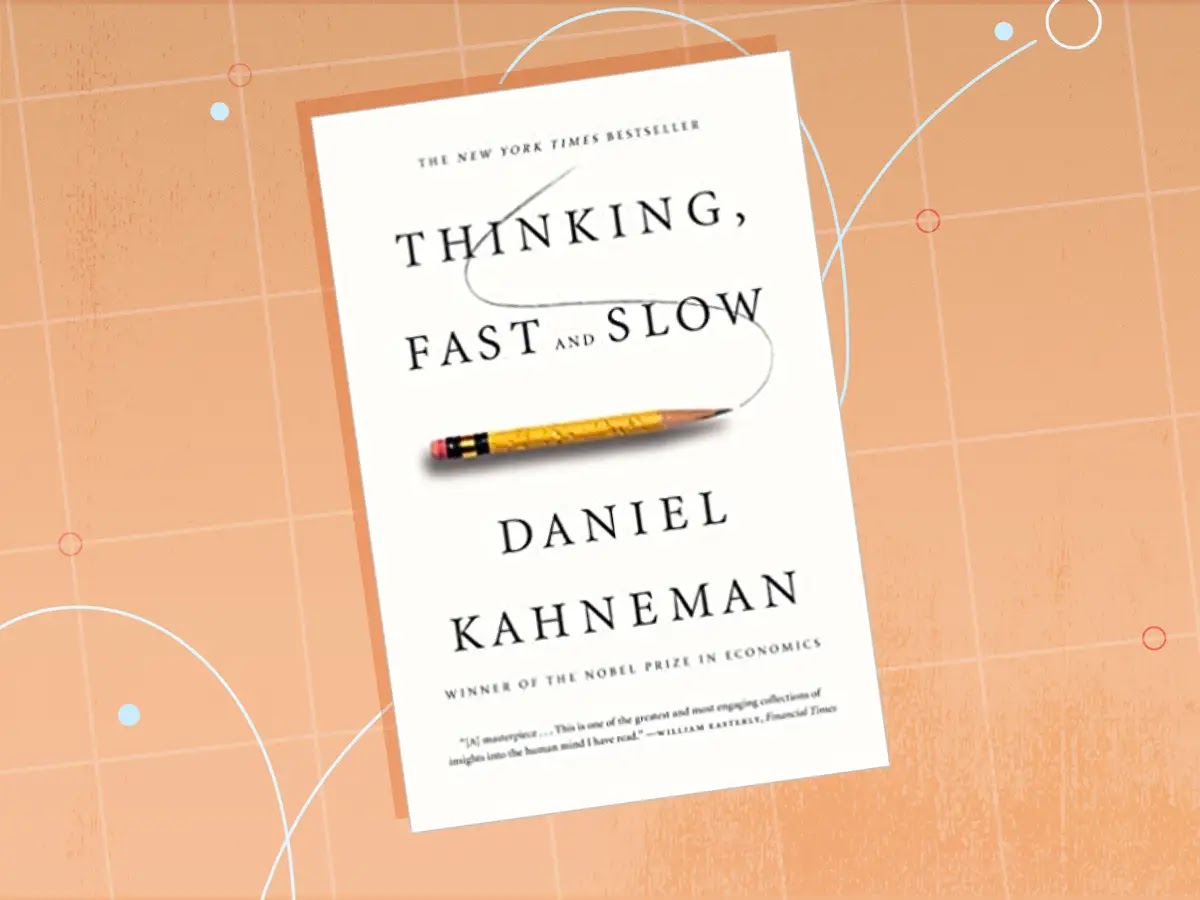
We all make mistakes. It's part of being human. But what if we could understand why we make those mistakes, particularly when it comes to judgment and choice? That's the ambitious goal of Daniel Kahneman's Thinking, Fast and Slow, a groundbreaking book that explores the hidden workings of our minds. Understanding these cognitive biases can lead us to better decisions in both our personal and professional lives.

Think about the last time you heard some juicy office gossip. Chances are, it involved someone making a questionable decision – maybe a risky investment, a poorly timed joke, or a disastrous presentation. We love dissecting the choices of others, right? It's entertaining, and let's be honest, it makes us feel a little bit smarter. But this fascination with the flaws of others isn't just about entertainment; it's a gateway to self-improvement. By anticipating how others might judge our choices, we can become more self-critical and ultimately, wiser.

Why This Book Matters: Unlocking Better Decisions

So, why should you care about cognitive biases? Because understanding them can dramatically improve your decision-making. Imagine you're a hiring manager. Without awareness of biases, you might unconsciously favor candidates who resemble your past successes, even if they aren't the best fit for the current role. By recognizing this "representativeness heuristic," you can focus on objective criteria and make fairer, more effective hiring decisions. Or consider your finances. Understanding the "availability heuristic" can help us make more rational investment decisions. Instead of overreacting to sensational news stories about market crashes, you can focus on long-term trends and data, avoiding costly emotional mistakes. These principles can even improve our relationships. Recognizing our tendency towards confirmation bias (seeking out information that confirms our existing beliefs) can help us be more open-minded and empathetic in our interactions with others.

The "Steve the Librarian" and the Representativeness Heuristic

Kahneman illustrates these cognitive biases with memorable examples. Consider the "Steve the librarian" thought experiment. If you meet Steve, who is shy, withdrawn, and has a passion for books, is he more likely to be a librarian or a farmer? Most people instinctively say "librarian" because Steve fits the stereotype of a librarian. However, statistically, there are vastly more farmers than librarians. This highlights the representativeness heuristic: our tendency to judge probabilities based on how similar something is to a mental prototype, even when that prototype is statistically unlikely. This bias can lead us to make snap judgments and overlook important statistical realities.

Plane Crashes and the Availability Heuristic

Similarly, the availability heuristic explains why we might overestimate the risk of dying in a plane crash. This can lead to overspending on travel insurance or avoiding air travel altogether, even though statistically driving is far more dangerous. Plane crashes are rare, but they are heavily reported in the news and vividly etched in our minds. Because these images are so readily available in our memory, we tend to overestimate their likelihood compared to more common (but less sensational) causes of death, like car accidents. This heuristic influences everything from our fears to our purchasing decisions.

Fast and Slow: The Two Systems of Thinking

To understand these biases, Kahneman introduces the concept of "fast thinking" (intuitive, automatic) and "slow thinking" (deliberate, effortful). He refers to these as "System 1" and "System 2." System 1 is the quick, intuitive part of our brain, responsible for gut reactions and snap judgments. It's what tells you that Steve is probably a librarian. System 1 is also susceptible to priming, where exposure to one stimulus influences our response to a subsequent stimulus, often without our conscious awareness. System 2 is the slower, more analytical part of our brain, responsible for reasoning and problem-solving. It's what would tell you to consider the base rates of librarians versus farmers. Imagine you're driving a car. System 1 handles the routine steering and braking, while System 2 kicks in when you encounter unexpected traffic or need to navigate a new route. Understanding how these two systems interact is crucial to recognizing and mitigating our cognitive biases.

Prospect Theory and Loss Aversion

After studying judgment, Kahneman and Tversky turned their attention to decision-making under uncertainty, leading to the development of Prospect Theory. A key element of Prospect Theory is loss aversion, the tendency to feel the pain of a loss more strongly than the pleasure of an equivalent gain. This explains why we often make irrational decisions to avoid even small losses.

From Collaboration to Cognitive Revolution: The Origin Story

Kahneman and Tversky's groundbreaking work didn't emerge in a vacuum. It was the product of a decades-long collaboration, starting way back in 1969. They were fascinated by intuitive statistics and quickly realized that even experts were susceptible to biases. They developed a unique method: posing questions to each other and meticulously examining their own intuitive (and often flawed) answers. This collaborative approach led to a revolution in our understanding of human decision-making.

My Own "Planning Fallacy" Moment

When I first read about the "planning fallacy" (our tendency to underestimate how long it will take to complete a task), it was a revelation! I suddenly understood why I was always late for everything. I consistently underestimated the time required to get ready, travel, and complete tasks. Recognizing this bias has helped me become more realistic in my planning and, consequently, more punctual. It's a small change, but it's had a significant impact on my life. What's one cognitive bias you've noticed affecting your life? Share your experiences in the comments below!

Confirmation Bias: A Modern Challenge

Think about political discussions. How often do we actively seek out news sources that challenge our existing political beliefs? More often than not, we gravitate towards sources that confirm what we already believe, reinforcing our biases and making constructive dialogue difficult. This is confirmation bias in action, and it affects all of us, regardless of our political leanings. Recognizing this tendency is the first step towards becoming more open-minded and engaging in more productive conversations.

A Roadmap for the Journey Ahead:

The book is structured to guide us through this fascinating landscape:

  • Part 1: Introduces the two-systems approach.
  • Part 2: Updates our understanding of judgment heuristics and explores the challenges of statistical thinking.
  • Part 3: Examines overconfidence and the illusion of certainty.
  • Part 4: Delves into decision making, rationality, and prospect theory.
  • Part 5: Explores the "experiencing self" versus the "remembering self" and their implications for our well-being.

Ready to unlock the secrets of your own mind? Pick up a copy of Thinking, Fast and Slow today and start your journey towards better decision-making. Which cognitive bias do you find most challenging to overcome? Share your experiences and strategies in the comments below!

Tags: Book Summary,Psychology,Behavioral Science,

Friday, February 21, 2025

क्या आप अपने साथी की भाषा बोल रहे हैं?


All Book Summaries

मंगल ग्रह और शुक्र ग्रह की कहानी:

क्या आपको कभी ऐसा लगता है कि आप एक ऐसे रिश्ते में हैं जहाँ हर बात पर झगड़ा होता है? जैसे आप एक ही घर में रहते हुए भी अलग-अलग भाषाएँ बोल रहे हैं? आप अकेले नहीं हैं। जॉन ग्रे की किताब पुरुष मंगल से हैं, महिलाएं शुक्र से ने इस आम समस्या को बहुत अच्छे से समझाया है: महिलाओं को लगता है कि उनकी बात कोई नहीं सुनता और पुरुषों को लगता है कि हर कोई उनकी आलोचना करता रहता है। किताब में यह बताया गया है कि पुरुष और महिलाएं अक्सर अलग-अलग तरीके से बात करते हैं और उनकी ज़रूरतें भी अलग होती हैं।

लेकिन सिर्फ़ किताब के बारे में बताना काफ़ी नहीं है। चलिए, गहराई में जाते हैं। क्या है जो पुरुषों को "मंगल ग्रह" और महिलाओं को "शुक्र ग्रह" बनाता है, और हम दीवारों की जगह पुल कैसे बना सकते हैं? क्या ये सच है कि पुरुष मंगल से और महिलाएं शुक्र से हैं?

मंगल ग्रह और शुक्र ग्रह: ऊपर-ऊपर से नहीं, अंदर तक समझिए

ग्रे का कहना है कि पुरुष ("मंगल ग्रह") ताकत, काम करने की क्षमता और सफलता को अहमियत देते हैं, जबकि महिलाएं ("शुक्र ग्रह") प्यार, बातचीत और रिश्तों को ज़्यादा ज़रूरी मानती हैं। मंगल ग्रह वाले लोग खुद ही समस्याएँ सुलझाते हैं और सलाह देना सम्मान की बात समझते हैं। शुक्र ग्रह वाली महिलाएं अपनी भावनाएँ बाँटने में खुश होती हैं और मदद करना प्यार जताना मानती हैं।

एक सच्ची कहानी: टपकता नल

मुझे याद है, एक बार मेरी दोस्त सारा एक टपकते नल के बारे में शिकायत कर रही थी। उसके पति, मार्क, ने तुरंत उसे ठीक करने का तरीका बताना शुरू कर दिया, यहाँ तक कि डायग्राम और यूट्यूब वीडियो भी दिखाए। सारा को गुस्सा आ गया। उसने कहा, "मैं तो बस चाहती थी कि तुम सुनो!" मार्क सच में मदद करना चाहता था, लेकिन उसका "मिस्टर फिक्स-इट" वाला तरीका बिल्कुल गलत था।

लेकिन ऐसा क्यों होता है? गहराई से देखिए

ग्रे की बात भले ही मददगार हो, लेकिन हमें और गहराई में जाना चाहिए। मनोविज्ञान कहता है कि ऐसा शायद इसलिए है क्योंकि पुराने ज़माने में पुरुषों का काम शिकार करना और खाना लाना था, इसलिए वे समस्याएँ सुलझाने पर ध्यान देते थे, जबकि महिलाओं का काम बच्चों की देखभाल करना और लोगों को जोड़ना था। समाज भी इन बातों को और बढ़ावा देता है। बचपन से ही लड़कों को मजबूत और आत्मनिर्भर बनने के लिए कहा जाता है, जबकि लड़कियों को दूसरों का ध्यान रखने और प्यार जताने के लिए कहा जाता है।

"मिस्टर फिक्स-इट" वाली गलती: ऐसे समाधान जो घुटन पैदा करते हैं

सोचिए, आपका साथी घर आता है और बताता है कि उसका बॉस बहुत परेशान कर रहा है। मंगल ग्रह वाला इंसान, समस्या सुलझाने की कोशिश में, तुरंत कहेगा, "तुम कोई और नौकरी क्यों नहीं देख लेते?" या "तुम्हें सब कुछ लिख लेना चाहिए और एचआर को बता देना चाहिए।" भले ही उसकी नीयत अच्छी हो, लेकिन इससे शुक्र ग्रह वाले इंसान को लग सकता है कि उसकी बात नहीं सुनी जा रही है। उसे लग सकता है, "तुम सोचते हो कि मैं खुद कुछ नहीं कर सकती," या "तुम्हें मेरी भावनाओं की कोई परवाह नहीं है।"

शुक्र ग्रह वाली महिला बस चाहती है कि उसकी बात सुनी जाए, उसे समझा जाए और उसकी भावनाओं को अहमियत दी जाए। उसे समाधान नहीं, सहानुभूति चाहिए।

"घर सुधार समिति" वाली गलती: बिना मांगे सलाह देना और यह महसूस कराना कि आप कभी "काफ़ी" नहीं हैं

इसके उलट, शुक्र ग्रह वाली महिला, प्यार और परवाह में, अक्सर अपने मंगल ग्रह वाले साथी को "सुधारने" की कोशिश करती है। वह उसकी खाने की आदतों, कपड़ों या बात करने के तरीके पर बिना मांगे सलाह दे सकती है। इस तरह लगातार सलाह देने से मंगल ग्रह वाले इंसान को लग सकता है कि उसे नियंत्रित किया जा रहा है, वह किसी काम का नहीं है और उसे प्यार नहीं किया जाता। उसे लगता है कि वह जैसा है, वैसा काफ़ी नहीं है।

एक और कहानी: मोज़े की दराज

मेरे पड़ोसी, टॉम, एक असली मंगल ग्रह वाले इंसान हैं। उनकी पत्नी, एमिली, जो पूरी तरह से शुक्र ग्रह वाली हैं, हमेशा उनकी मोज़े की दराज को फिर से जमाती रहती हैं और उन्हें ज़्यादा व्यवस्थित रहने के "उपयोगी" तरीके बताती रहती हैं। टॉम आखिरकार फट पड़ा, "मुझे अकेला छोड़ दो! मैं अपने मोज़े खुद ढूंढ सकता हूँ!" एमिली की नीयत अच्छी थी – वह उसकी ज़िंदगी आसान बनाना चाहती थी – लेकिन टॉम को लगा कि वह उसे नियंत्रित कर रही है और उसे कमज़ोर बना रही है।

ध्यान दें: यह हमेशा बुरा नहीं होता

यह समझना ज़रूरी है कि न तो "मिस्टर फिक्स-इट" और न ही "घर सुधार समिति" हमेशा बुरे होते हैं। कभी-कभी, एक महिला सच में चाहती है कि पुरुष उसकी समस्या सुलझाने में मदद करे। और कभी-कभी, एक पुरुष अपने साथी से सलाह लेने के लिए तैयार होता है। ज़रूरी बात है सही समय और तरीका

दूसरे ग्रहों के बीच तालमेल: मंगल और शुक्र के लिए काम आने वाले तरीके

तो, हम इन मंगल ग्रह और शुक्र ग्रह वाली बातों को कैसे संभालें और एक ऐसा रिश्ता कैसे बनाएँ जहाँ दोनों साथियों को लगे कि उनकी बात सुनी जा रही है, उन्हें अहमियत दी जा रही है और उनसे प्यार किया जा रहा है?

  • मंगल ग्रह वालों (पुरुषों) के लिए: सहानुभूति से सुनने की कला सीखें

    • ध्यान से सुनना ज़रूरी है: अपना फोन नीचे रखें, आँखों में आँखें डालकर देखें और सच में सुनें कि आपका साथी क्या कह रहा है।
    • उसकी भावनाओं को समझें: बिना किसी फैसले के उसकी भावनाओं को स्वीकार करें। ऐसा कहने की कोशिश करें, "यह बहुत निराशाजनक लग रहा है," या "मैं समझ सकता हूँ कि तुम क्यों परेशान हो।"
    • सवाल पूछकर स्पष्ट करें: सवाल पूछकर दिखाएँ कि आप सच में जानना चाहते हैं, जैसे, "क्या तुम मुझे इसके बारे में और बता सकती हो?" या "तुम्हें कैसा महसूस हुआ?"
    • समाधान नहीं, मदद की पेशकश करें (जब तक कि पूछा न जाए): तुरंत समाधान बताने की इच्छा को रोकें। इसके बजाय, यह कहकर मदद की पेशकश करें, "मैं तुम्हारे साथ हूँ। मैं तुम्हारी कैसे मदद कर सकता हूँ?" या इससे भी बेहतर, "क्या तुम समाधान के बारे में सोचना चाहती हो, या तुम्हें बस मेरी बात सुनने की ज़रूरत है?"
    • वाक्य की शुरुआत:
      • "जान, ऐसा लग रहा है कि तुम्हारा दिन बहुत बुरा था। अगर तुम बात करना चाहती हो तो मैं सुनने के लिए यहाँ हूँ। क्या तुम्हें समाधान के लिए मेरी मदद चाहिए, या तुम चाहती हो कि मैं बस सुनूँ?"
      • "मैं देख सकता हूँ कि इससे तुम बहुत परेशान हो। मैं बिना किसी फैसले के सुनने के लिए यहाँ हूँ।"
    • शुक्र ग्रह वालों (महिलाओं) के लिए: स्वीकार करने और प्यार से कहने की ताकत

    • बिना मांगे सलाह देने से बचें: लगातार सलाह या आलोचना करने की इच्छा को रोकें।

    • स्वीकार करने पर ध्यान दें: अपने साथी को उसकी कमियों और खूबियों के साथ स्वीकार करें।
    • मांग करें, हुक्म नहीं: अपनी सलाह को सकारात्मक तरीके से और अपनी ज़रूरतों के हिसाब से पेश करें।
    • "मुझे लगता है" वाले वाक्य का इस्तेमाल करें: अपने साथी पर दोष लगाए बिना अपनी भावनाओं को व्यक्त करें। उदाहरण के लिए, "तुम कभी बर्तन धोने में मदद नहीं करते" कहने के बजाय, "जान, जब बर्तन ढेर हो जाते हैं तो मुझे बहुत बोझ लगता है। अगर तुम आज रात बर्तन धो दो तो मेरी बहुत मदद होगी।"
    • वाक्य की शुरुआत:
      • "मैंने देखा है कि तुम आजकल तनाव में लग रहे हो। क्या तुम मेरे कुछ विचार सुनना चाहोगे, या तुम चाहते हो कि मैं तुम्हें अकेला छोड़ दूँ?"
      • "जब तुम [कोई खास काम] करते हो तो मुझे बहुत प्यार और सहारा महसूस होता है। क्या तुम इसे और ज़्यादा करने के लिए तैयार हो?"

तुरंत ठीक करने के अलावा: लंबे समय तक काम आने वाली रणनीति

  • सुनने के लिए समय निकालें: हर हफ्ते बिना किसी रुकावट के बातचीत करने के लिए समय निकालें।
  • बातचीत के नियम: बातचीत के नियम बनाएँ, जैसे कि कोई बीच में नहीं बोलेगा, ध्यान से सुनेगा और एक-दूसरे की भावनाओं को समझेगा।
  • पेशेवर सलाह लें: अगर आपको ठीक से बात करने में परेशानी हो रही है, तो पेशेवर सलाह लेने पर विचार करें।

आम रुकावटों को दूर करना:

  • अगर मंगल ग्रह वाला इंसान सच में समस्या को ठीक करना चाहता है तो क्या करें? पहले शुक्र ग्रह वाले इंसान की भावनाओं को समझें, फिर अगर वह चाहे तो समाधान बताएँ।
  • अगर शुक्र ग्रह वाले इंसान को लगे कि मंगल ग्रह वाला इंसान सुनने की कोशिश करने पर भी उसे अनदेखा कर रहा है तो क्या करें? मंगल ग्रह वाले इंसान को आँखों में आँखें डालकर, सिर हिलाकर और बोलकर दिखाना होगा कि वह सुन रहा है।

विरोध की जड़: छिपी हुई भावनाओं को समझना

यह समझना भी ज़रूरी है कि इसके पीछे क्या भावनाएँ हैं। जब एक महिला पुरुष के समाधान का विरोध करती है, तो पुरुष को अक्सर लगता है कि उसकी काबिलियत पर सवाल उठाया जा रहा है। उसे लगता है कि वह एक समस्या-समाधानकर्ता के रूप में अपनी मंगल ग्रह वाली भूमिका निभाने में नाकाम हो रहा है। जब एक पुरुष महिला के सुझावों का विरोध करता है, तो महिला को अक्सर लगता है कि उसे उसकी ज़रूरतों की परवाह नहीं है या वह उसकी राय को अहमियत नहीं देता है।

अभ्यास से सब ठीक होता है: दूसरे ग्रहों के बीच की दूरी को कम करना

एक मजबूत रिश्ता बनाने के लिए सोच-समझकर कोशिश और अभ्यास करना ज़रूरी है। पुरुषों को बिना समाधान बताए या उनकी भावनाओं को बदलने की कोशिश किए महिलाओं की बात ध्यान से सुनने का अभ्यास करना चाहिए। महिलाओं को बिना मांगे सलाह या आलोचना दिए बिना स्वीकार करने और प्यार से बात करने का अभ्यास करना चाहिए।

क्या आप मंगल ग्रह वाले हैं या शुक्र ग्रह वाले? क्विज़ खेलें!

  1. जब आपका साथी परेशान होता है, तो आपकी पहली प्रतिक्रिया क्या होती है:
    a) समाधान और व्यावहारिक सलाह देना।
    b) सहानुभूति से सुनना और आराम देना।
  2. आपको सबसे ज़्यादा प्यार कब महसूस होता है जब आपका साथी:
    a) कुछ प्रभावशाली काम करता है।
    b) अपनी भावनाओं को खुलकर व्यक्त करता है।
  3. आपकी आदत है:
    a) काम करने की क्षमता और नतीजों पर ध्यान देना।
    b) रिश्तों को जोड़ना और उन्हें अहमियत देना।

(स्कोरिंग: ज़्यादातर A = मंगल ग्रह वाले; ज़्यादातर B = शुक्र ग्रह वाले)

आखिरी कहानी: अपनी भाषा ढूँढना

मुझे याद है एक समय था जब मैं और मेरा साथी हमेशा लड़ते रहते थे। मैं, रिश्ते में "मंगल ग्रह" होने के नाते, हमेशा उसकी समस्याओं को ठीक करने की कोशिश कर रहा था, जबकि वह, "शुक्र ग्रह" होने के नाते, बस चाहती कि मैं सुनूँ। जब हमने इन तरीकों का अभ्यास करना शुरू किया – मैंने ध्यान से सुनना और उसने प्यार से मेरी मदद मांगना – तभी हमने एक-दूसरे को सच में समझना शुरू किया।

मंगल ग्रह वालों और शुक्र ग्रह वालों के बीच इन बुनियादी अंतरों को समझकर, हम दूरी को कम करना, बेहतर तरीके से बात करना और मजबूत और ज़्यादा संतोषजनक रिश्ते बनाना शुरू कर सकते हैं। तो, क्या आप अपने औजार या घर सुधार की सूची को नीचे रखने और अपने साथी की बात सच में सुनने के लिए तैयार हैं? दूसरे ग्रहों के बीच तालमेल की यात्रा समझने से शुरू होती है।

अब आपकी बारी है! नीचे कमेंट में अपने अनुभव साझा करें। क्या आपने इन मंगल ग्रह और शुक्र ग्रह वाली बातों को अपने रिश्तों में देखा है? आपको कौन सी रणनीति मददगार लगी? आइए एक-दूसरे से सीखें!

Tags: Book Summary,Emotional Intelligence,Psychology,Behavioral Science,